A small pro tip for building a learning organization.
Many years ago I stopped having enough time to read all the books I wanted to read. It wasn’t just a function of limited spare time. A long day of Zoom meetings during a global pandemic has a tendency to exhaust even the most hardy souls. Watching a TV series I have already watched three times is sometimes a bit easier than engaging in critical thinking.
So, with limited time and limited energy, how do you prioritize your investments?
Easy, you do the same thing you do every day as a leader.
You delegate.
In conversations across my organization you can pretty quickly identify who the curious readers are. These are the folks that see reading as a key element of their career growth and tend to always have a “next book” that they want to read to hone their craft. Once you find these individuals your goal is to buy them tons of books, including a few from your own future reading list.
The benefits of this approach are manifold:
• Voracious readers love getting more books
• It leads to high quality conversations when discussing their book review
• You will know which books are engaging and worth your time
• There are even more high quality conversations once you finish reading the book yourself
Building a learning organization requires investment from everyone. For leaders, it means a monetary investment (buy the books), a time investment (discussing the books), and a hard requirement to remain curious. For direct and indirect reports, it requires an investment of time (read the books), and a commitment to remain engaged with their senior leader.
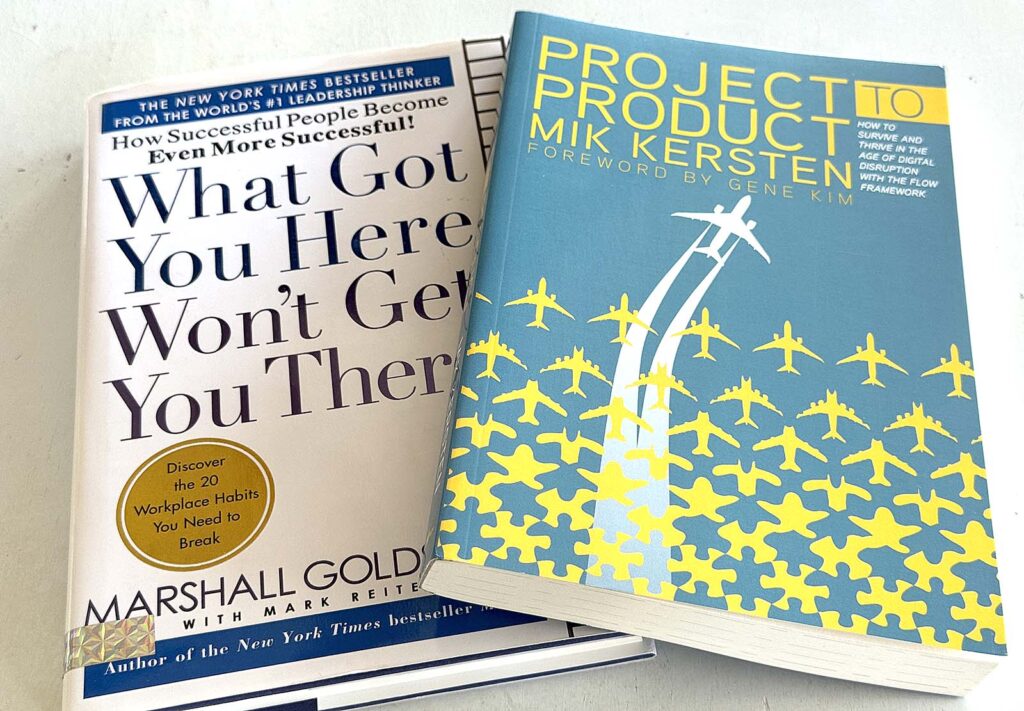
This method provides huge value in both directions. I never would have stumbled upon Project to Product by Mik Kersten without a recommendation by one of my product managers. On the flip side, I have bought more copies than I can count of What Got You Here Won’t Get You There by Marshall Goldsmith for members of my org. It’s one of the most common pieces of guidance that I give to rising leaders.
Did you find a particularly good book? Buy it for the whole team. It’s an effective way to signal “this is what resonates, and we should all take a look.”